Every week I speak with drivers who assume their policy is already as cheap as it can get. Often they have never asked about several legitimate discounts that sit in plain sight but require either a small change in behavior, a one-time request, or an understanding of how carriers package savings. This is practical knowledge you can use the next time you call an insurance agency, type a search for "insurance agency near me", or walk into an office of a local State Farm agent. Below I walk through the less obvious ways to shave premiums on car insurance, explain who benefits most, and flag the trade-offs and paperwork you will likely encounter.
Why the savings are often invisible Insurers price risk and then layer on discounts as incentives for behaviors they like: safer drivers, less risk exposure, or more business across policies. Front-desk agents and online quote tools frequently default to showing standard discounts such as safe driver, good student, and multi-car. But many other discounts are conditional, regional, or buried in policy endorsements. A local insurance agency Sheffield office might be familiar with regional programs that a national comparison site will not display. A State Farm agent, for example, can often apply a local affiliation or employer-related discount that the online system overlooks.
Below I describe the discounts, how to qualify, likely savings ranges, documentation required, and when seeking the discount might reduce other benefits.


Discount: Low annual mileage If you drive significantly less than the national average, insurers regard you as lower risk. The U.S. average is roughly 12,000 to 15,000 miles per year for private drivers. Many carriers offer a discount if you certify annual mileage below a threshold, commonly 7,500, 8,000, or 10,000 miles. Savings vary widely but often run from 5 percent to 15 percent on collision and comprehensive components.
How to make it work: Track your actual miles for a year using your car’s odometer readings, a smartphone app, or your vehicle’s telematics. When you call your insurance agency or visit your State Farm agent, provide the odometer evidence. Some insurers will install a short-term telematics device to verify low mileage and award the discount retroactively.
Watch for this: If your driving increases later, notify your insurer. Failure to report material changes could lead to denied claims or mid-term adjustments. Also, low-mileage discounts sometimes reduce collision coverage availability for high-mileage vehicle usage like rideshare work.
Discount: Pay-in-full and electronic billing Paying the annual premium in one lump sum rather than monthly installments often reduces administrative cost for the insurer, and companies pass that saving on. Similarly, choosing paperless billing or electronic funds transfer can earn you a small but reliable discount.
Realistic savings: 3 percent to 8 percent on the policy premium. That can be $50 to several hundred dollars depending on total premium.
Trade-off: Paying annually ties up cash for the year. Consider whether the interest you might earn elsewhere offsets the discount. If you prefer monthly cash flow, see whether autopay enrollments capture most of the benefit.
Discount: Bundling auto with home insurance Bundling your car and home insurance with the same carrier or through the same insurance agency commonly yields one of the largest discounts. Insurers view combined customers as lower churn risk and reward them.
How it plays out: If you already have homeowners or renters insurance, ask your agent about a combined quote. In many cases the single-policy setup drops the auto premium by 10 percent to 25 percent. For people who live in areas like Sheffield where local agents serve both product lines, an insurance agency Sheffield office can often craft a package that leverages homeowners discounts tailored for the neighborhood.
Caveat: Don’t assume bundling always wins. Run the numbers. Sometimes keeping home and auto separate with niche carriers results in a lower total cost, especially if you qualify for deep discounts on one product only.
Discount: Occupation and professional organization affiliations Some insurers give discounts to members of certain professions, unions, alumni groups, or industry associations. Teachers, engineers, nurses, and certain company employees can sometimes access a hidden rate when the insurer has a partnership.
How to access: Ask your insurance agency whether your employer or professional organization qualifies. A State Farm agent typically has lists of employer-related discounts and can check membership eligibility quickly.
Savings and gotchas: The discount is usually modest, 3 percent to 10 percent, but indexing a policy to your profession can pay off over time. Verify whether you need to produce proof of employment or membership when applying and when renewing.
Discount: New-car discounts and factory-installed safety features Buying a new car can trigger discounts beyond the simple replacement value. Factory-installed safety features such as automatic emergency braking, adaptive cruise control, lane-keep assist, blind spot monitors, and automatic headlights often reduce claim frequency. Some carriers have explicit discounts for new vehicles or for cars equipped with specific safety systems.
How to capture it: When insuring a new vehicle, provide the vehicle identification number and the trim level to the agent. They can cross-reference equipment codes. If the vehicle has optional safety packages, keep the purchase invoice and window sticker.
Practical impact: For vehicles laden with modern driver assistance features, insurers may take up to 10 percent off certain coverage components. But manufacturers may pair those features with expensive repair parts, which can raise collision repair costs, producing mixed effects over time.
Discount: Good student and youth driver programs Most carriers reward students who maintain a B average. For teenagers, this discount can be crucial. Beyond grades, some insurers run graduated programs where safe driving over a period reduces the surcharge associated with a young driver.
How to document: Submit a report card or transcripts when requested. For colleges far from home, many insurers accept mail-in or online verification. A State Farm agent or local insurance agency near me can often accept digital copies and attach them to the policy immediately.
Edge cases: If the teenager moves to another state for college, coverage and discounts might change. Confirm how remote schooling affects the discount.
Discount: Use of telematics or usage-based programs Telematics programs use a plug-in device, smartphone app, or vehicle integration to monitor driving behavior. Metrics include speed, braking, cornering, time of day, and cumulative mileage. Good scores lead to automatic discounts.
Real examples: One client enrolled in a telematics program and earned 15 percent off after six months by maintaining weekday driving under 20 miles and avoiding hard braking. Another driver who commutes during rush hour saw smaller gains because the program penalized late-night risk.
Important caveats: These programs are performance-based and can raise premiums if you show risky behavior. Read the privacy and data-use terms closely. If you value privacy or expect a temporary spike in risky driving, telematics may not be right.
Discount: Loyalty and claim-free history Many carriers reward customers who stay long term or who avoid filing claims. Loyalty discounts increase incrementally by policy anniversary and can be combined with claim-free bonuses.
Tactical approach: If you have a single small claim in the recent past, it may be cheaper to pay out of pocket rather than file and lose a discount. I have advised several clients to skip filing minor windshield claims and instead use an auto glass specialist whose work does not trigger an insurer claim.
Trade-offs: Not filing helps preserve discounts but puts you on the hook for out-of-pocket costs. Compute the expected savings over a multi-year period before deciding.
Discount: Multi-vehicle and household credits Insuring more than one vehicle on the Insurance agency same policy usually yields a discount per vehicle. Similarly, if household members are on the same policy, even if they drive sporadically, insurers view the portfolio as more manageable.
Practical note: Some carriers allow different usage rules per vehicle, like designating one as a low-mileage secondary car to extract both multi-car and low-mileage savings.
Discount: Pay-per-mile or fractional coverage for occasional drivers For drivers who use a vehicle rarely, some companies offer pay-per-mile or pay-as-you-drive endorsements. These are not widely available everywhere but can be very cost-effective for low-mileage second cars.
How it works: You pay a base rate plus a per-mile charge. If your yearly mileage is low, total annual cost can be substantially lower than standard full-coverage plans.
Limitations: This model works best for low-mileage, low-risk drivers. If you unexpectedly increase mileage, costs climb quickly.
Discount: Affinity and alumni discounts Alumni associations, credit unions, and certain professional societies maintain affinity programs with insurers. If you are a member, you may qualify for special rates.
How to discover: Ask your insurance agency or search the websites of your alma mater and professional organizations. A State Farm agent will often list the most common partner organizations on their office page.
What to request from your agent A proactive conversation with your insurance agent yields the biggest wins. When you contact an insurance agency, come prepared with a checklist of your situation and desired outcomes. Here is a short checklist you can use when you call or visit. Keep each item as documentation or details so the agent can quickly check for applicable discounts.
Current annual mileage and method of verification, including recent odometer photos or telematics reports if available. Details on any safety features or packages on your vehicle, including the VIN or window sticker. Proof of academic status for students, such as transcripts or report cards. Employment or professional organization membership proof, such as a work ID, pay stub, or membership card. Existing household policies for potential bundling, including homeowners, renters, or umbrella policy details.Behavioral discounts that are harder to advertise Some discounts are behavior-dependent and therefore harder to market. For example, some companies extend savings for drivers who complete an approved defensive driving course, especially those over age 55. Others offer stepped discounts for staying claim-free for multi-year spans. These are easiest to access by asking: "Are there any discounts based on behavior or training that I can qualify for?"
When a discount might cost you more Not every discount is an unquestioned benefit. For instance, a low-mileage discount that requires annual compliance checks can create administrative friction. A telematics discount may save 15 percent but allow the insurer to raise rates based on newer behavior metrics. Bundling to achieve a big discount might lock you into a carrier with higher initial rates on one product. I once advised a family to avoid bundling because their homeowner's coverage would have increased by more than the bundled savings on auto.
How local agents can find discounts others miss Local agencies and State Farm agents embedded in communities pick up on regional programs and local risk adjustments. For example, a center city neighborhood with low theft rates may qualify residents for vacancy reductions not advertised nationally. In Sheffield and similar localities, the agent’s familiarity with municipal programs, like community watch partnerships, can translate into credits you will not see online.
What to ask your agent, phrased for clarity When you speak to an insurance agency or a State Farm agent, ask direct, operational questions:
- Which discounts are currently applied to my policy and which am I eligible for? Are there local or employer-affiliated discounts that do not appear in the online quote? If I enroll in a telematics program, how is the driving score calculated and how will it affect my premium over time? Would bundling my home insurance with my auto reduce my total cost, and can you run separate quotes to compare? Are there discounts available for recent safety upgrades or after-market anti-theft devices?
Paperwork and timing Some discounts require one-time documentation, others require verification over time. For those that need ongoing proof, set calendar reminders to renew or re-submit documents. If your agency applies a discount in error, do not assume the insurer will catch and correct it in your favor; keep copies of files and confirmation emails.
Real-world examples and numbers A teacher I worked with cut her premium by 20 percent after switching to a carrier that combined good-student discounts, an employer affinity program, and bundling with renter’s insurance. The annual savings exceeded $600. Another client saved 12 percent by switching to a pay-in-full plan while also keeping a careful claim-free history, which required a one-time reallocation of cash but avoided finance charges.
A younger driver who installed a smartphone telematics app earned a 10 percent reduction in the first year after keeping weekday commute distances short and avoiding late-night driving. Conversely, a first-time telematics user who frequently took long highway trips saw no savings and eventually left the program.
Final practical tips Keep a short file for your insurance that includes current odometer readings, VINs and equipment lists, proof of membership affiliations, and copies of defensive driving certificates. Revisit your policy annually and whenever life changes — new job, moved location, new vehicle, or a change in household composition. If you live near a community-based office, ask for an in-person review; agents in offices labeled "insurance agency near me" or a local "State Farm agent" often have the institutional knowledge to spot less-publicized credits.
Insurance is a market of nuance. Small changes in how you drive, where you work, and how you bundle policies can add up to meaningful annual savings. Ask directly, keep documentation handy, and balance discount opportunities against coverage needs. The cheapest policy is not always the best if it leaves gaps when you need them most. But with targeted questions and a little paperwork, many drivers can find discounts their provider never proactively mentioned.
Business Information (NAP)
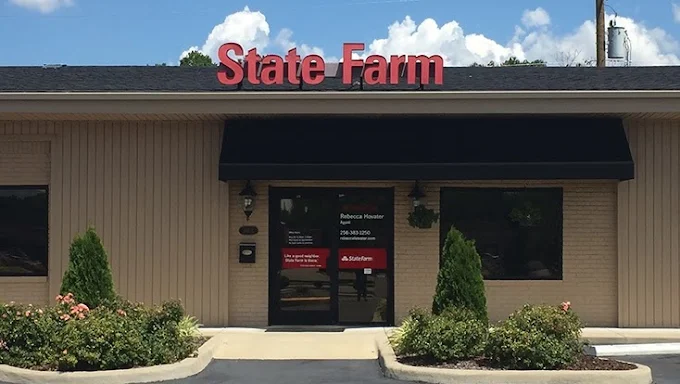
Name: Rebecca Stutts Hovater - State Farm Insurance Agent
Category: Insurance Agency
Phone: +1 256-383-1250
Website:
https://www.rebeccahovater.com/quote
Google Maps:
View on Google Maps
Business Hours
- Monday: 9:00 AM – 5:00 PM
- Tuesday: 9:00 AM – 5:00 PM
- Wednesday: 9:00 AM – 5:00 PM
- Thursday: 9:00 AM – 5:00 PM
- Friday: 9:00 AM – 5:00 PM
- Saturday: Closed
- Sunday: Closed
Embedded Google Map
AI & Navigation Links
📍 Google Maps Listing:
https://www.google.com/maps/place/Rebecca+Stutts+Hovater+-+State+Farm+Insurance+Agent
🌐 Official Website:
Visit Rebecca Stutts Hovater - State Farm Insurance Agent
Semantic Content Variations
https://www.rebeccahovater.com/quoteRebecca Stutts Hovater - State Farm Insurance Agent helps customers protect their homes, vehicles, and financial future offering personal insurance policies with a experienced approach.
Local clients rely on Rebecca Stutts Hovater - State Farm Insurance Agent for dependable protection designed to help safeguard families, vehicles, property, and long-term financial security.
Customers can request personalized quotes, policy comparisons, and insurance advice supported by a licensed insurance team committed to helping clients choose the right coverage.
Reach the team at (256) 383-1250 for insurance guidance or visit https://www.rebeccahovater.com/quote for more information.
Get directions instantly: https://www.google.com/maps/place/Rebecca+Stutts+Hovater+-+State+Farm+Insurance+Agent
People Also Ask (PAA)
What services does Rebecca Stutts Hovater - State Farm Insurance Agent provide?
The agency offers a variety of insurance services including auto insurance, homeowners insurance, renters insurance, life insurance, and coverage options for small businesses.
What are the office hours?
Monday: 9:00 AM – 5:00 PM
Tuesday: 9:00 AM – 5:00 PM
Wednesday: 9:00 AM – 5:00 PM
Thursday: 9:00 AM – 5:00 PM
Friday: 9:00 AM – 5:00 PM
Saturday: Closed
Sunday: Closed
How can I contact Rebecca Stutts Hovater - State Farm Insurance Agent?
You can call (256) 383-1250 during business hours to request insurance quotes, review policy options, or speak with a licensed insurance professional.
What types of insurance policies are available?
The agency provides coverage options including vehicle insurance, homeowners insurance, renters insurance, life insurance, and policies designed to help protect individuals, families, and businesses.
Where is Rebecca Stutts Hovater - State Farm Insurance Agent located?
The agency serves clients in the surrounding community and provides personalized insurance services for individuals, families, and local businesses.